


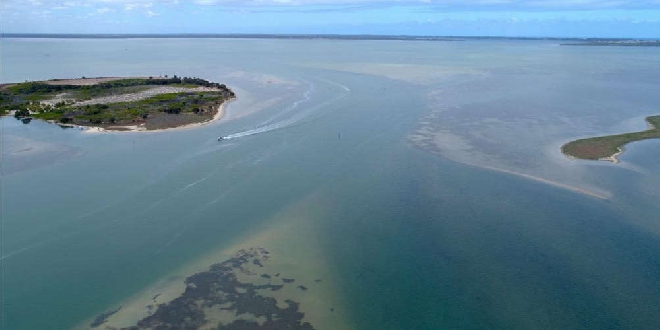
Mass fish deaths could be a thing of the past in the Peel-Harvey estuary with a new innovative trial helping to improve water quality to reduce algal blooms.
Scientists from Healthy Estuaries WA applied a specially manufactured clay-based treatment to a drain in the catchment of the Peel-Harvey estuary, which saw 95 per cent of phosphorus bind to the clay at the treatment site, preventing it from fuelling algal growth in the downstream waterways.
Many waterways like the Serpentine River can receive excess phosphorus from fertiliser use in their catchment, potentially causing algal growth that can lead to fish kills and adverse human health impacts.
The Department of Water and Environmental Regulation (DWER) has been working on a novel clay known as Hydrotalcite clay, or HT-clay.
It is made from a natural bentonite clay modified with hydrotalcite: a phosphorus binding mineral.
The manufacturing process involves mixing several raw ingredients together, causing chemical reactions where the clay becomes coated in the phosphorus binding material.
“We know the Peel-Harvey estuary (Bindjareb Djilba) is the heart of our community in Mandurah, and we need to address water quality issues so that our waterways can continue to be the lifeblood of our community for generations to come," Mandurah MLA David Templeman said.
“This trial demonstrates that there are many tools available to us to improve water quality, and we need to make use of them all to achieve significant nutrient reductions for the Peel-Harvey estuary.”
 Mission Australia celebrates 25 years of supporting young people through Mandurah Reconnect program
 'Mad Eagles fan' wins $6 million Lotto prize
 Mandurah woman loses everything in house fire
 Gift card scams surge past $1 million prompting urgent warning from Consumer Protection
 Secret Harbour by-election attracts record 16 candidates
 Major party candidates locked-in for looming Secret Harbour by-election
 Comet Bay Primary to offer full-time kindy from 2027
 North Dandalup crash claims life of driver
 Date set for Mandurah's Town Ward Extraordinary Election