


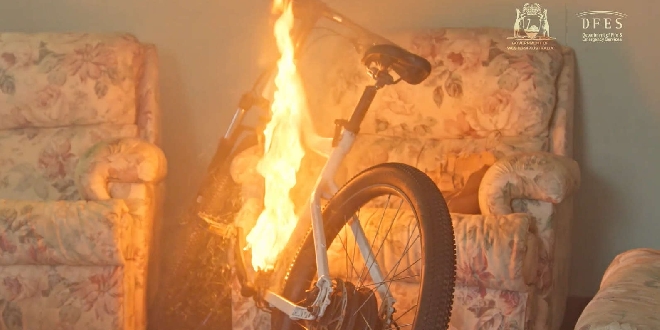
The Department of Fire and Emergency Services has released vision showing how fast a house can catch on fire as a result of a lithium-ion battery.
DFES has responded to 70 fires ignited by lithium-ion batteries so far this year - on target to pass the previous record of 110 set in 2023.
Authorities are particularly concerned about the spate of residential fires sparked by e-bikes or e-scooters that can spread very quickly and are difficult to extinguish.
Emergency Services Minister Stephen Dawson said local authorities are concerned that alongside the significant increase in lithium-ion devices that Western Australians could be putting themselves at risk in charging the highly flammable products.
“Lithium-ion batteries are relatively safe when you buy them from reputable suppliers and treat them with care," he said.
“But compromised products that overheat and explode have caused fatal house fires overseas and interstate - we don’t want Western Australians at risk."
eRideables have already caused 20 fires this year, including two devastating incidents last week that destroyed homes in Karratha and Carlisle.
Fire and Emergency Services Commissioner Darren Klemm AFSM said lithium-ion batteries have fast become one of the greatest fire risks in our homes.
“But these fires are preventable if you follow safety advice including charging on a hard surface and not leaving devices on charge indefinitely," he said.
“We’re also asking the community to be vigilant around other fire hazards such as candles, unattended heaters and kitchen fires. Home fires typically spike in the cooler months when people are spending more time indoors using heating or electronic devices.
“Make sure you have a home fire escape plan, ensure your family knows what to do if a fire starts and check your smoke alarm regularly. Only a working smoke alarm will wake you up and give you vital time to escape.”
To reduce the risk of lithium-ion battery fires, DFES recommends to:
• purchase reputable products and source replacement batteries from the original supplier;
• regularly check for signs of physical damage and overheating;
• charge devices away from flammable items such as beds or couches;
• set a timer that will remind you to remove a fully charged device before you go to sleep;
• install a hard-wired interconnected smoke or heat alarm in areas of the home where you
are charging devices.
 Bushfire readiness takes centre stage at City of Kwinana's free Summer Sounds festival
 WA Open Golf Championship to tee off at Secret Harbour Golf Links
 Halls Head named WA's most persistent storm damage hotspot
 Four illegal e-bikes to be crushed after police crackdown in Halls Head, Falcon
 Aboriginal jobs and careers expo to attract 1000 attendees in Rockingham
 Firefighters attend Lakelands home after reports of thick smoke
 WA Government to ban screen use for younger students as part of six-month trial
 Singleton General Store shutdown over illicit tobacco, vape sales
 Concerns for missing Bertram woman